


How To Choose A Financial Advisor.
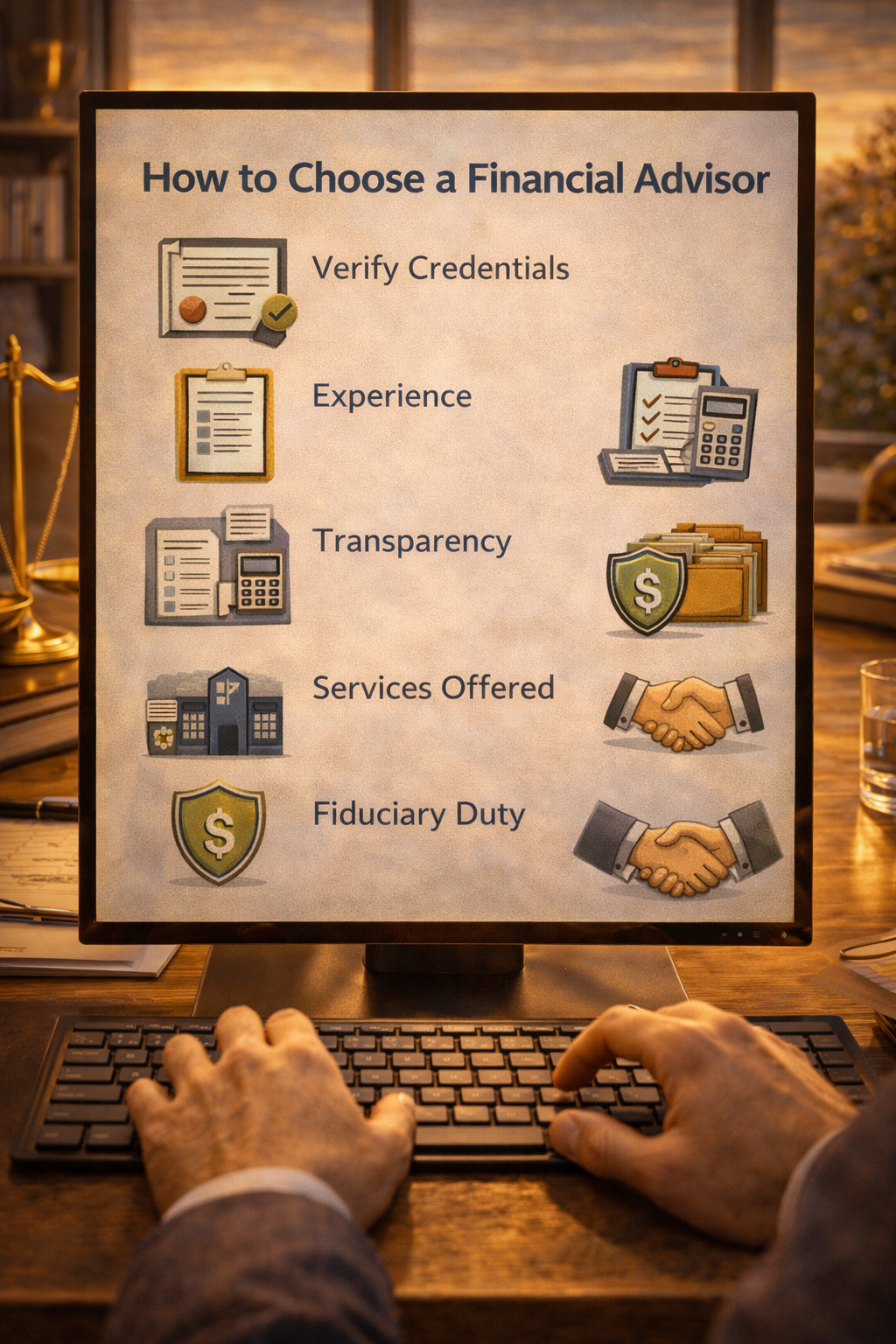
How To Choose A Financial Advisor
Transparency Is Non-Negotiable.
Perspective, not advice.
Choosing a financial adviser is not about finding the smartest person in the room.
It’s about finding someone whose process, incentives, and integrity are clear.
An adviser should not make you feel rushed, confused, or pressured.
They should make you feel calm, informed, and in control.
You are not hiring someone to predict the future.
You are hiring someone to help you navigate uncertainty with discipline.
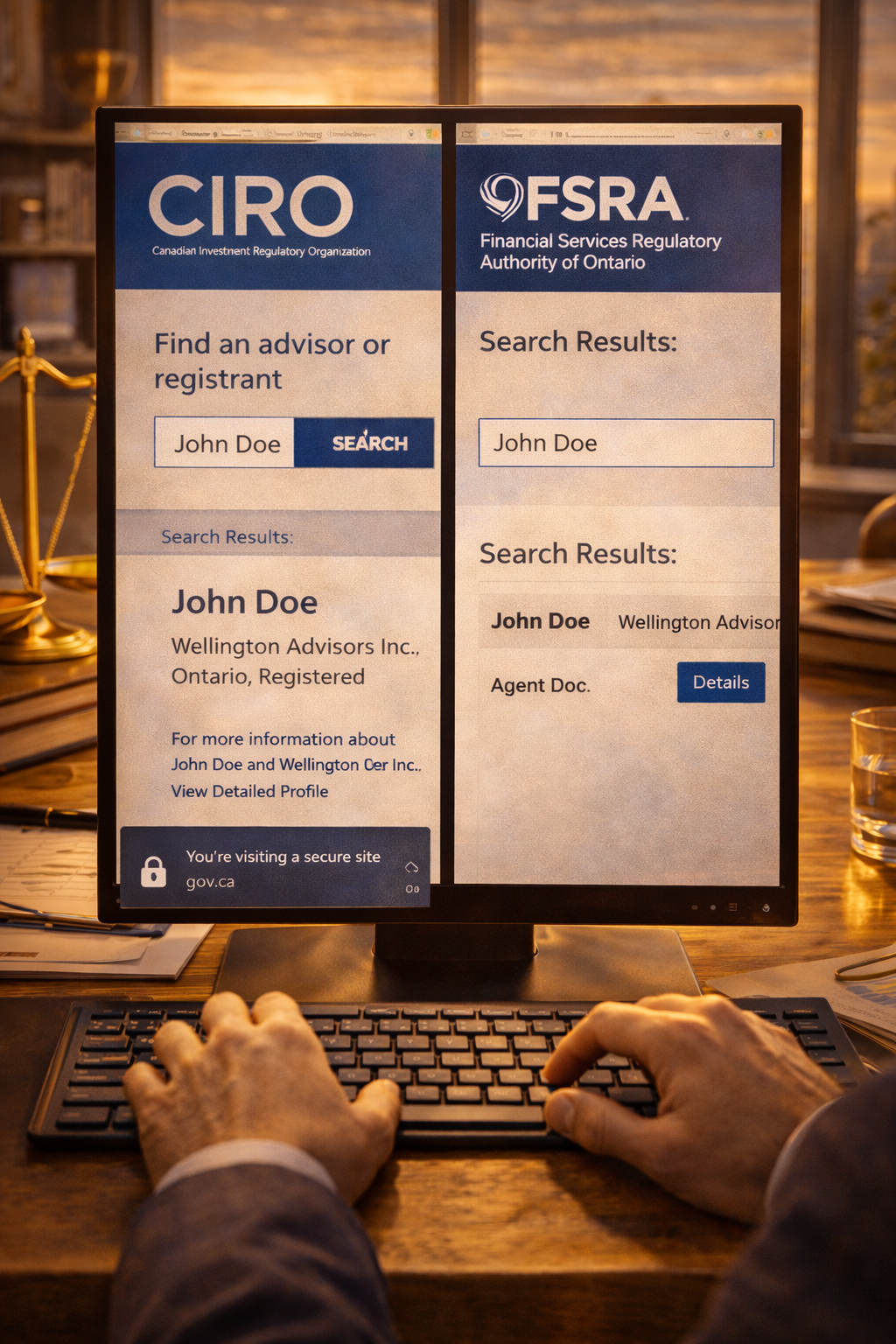
Step 1 - Verify They Are Properly Registered
Before you discuss strategies or investments, confirm they are legitimate.
In Canada, you can check regulatory databases such as:
CIRO (Canadian Investment Regulatory Organization)
FSRA (Financial Services Regulatory Authority of Ontario)
These databases act like reference lists.
They confirm whether someone is licensed, in good standing, or has disciplinary history.
Also review:
Professional designations
Years of experience
Any past regulatory actions
Credentials alone don’t guarantee quality, but lack of transparency is a red flag.

Step 2 - Understand Exactly How They Get Paid
This is the most important step—and where most people fail.
Ask directly:
Are you commission-based?
Do you charge a percentage of assets (AUM)?
Are you fee-only / advice-only?
Do you earn trailing commissions on products?
Do you get paid MORE for recommending certain products?
Then ask:
“What does this cost me in dollars per year?”
Not percentages. Dollars.
Simple Breakdown:
Commission-based → potential bias
AUM (1–2%) → can be expensive over time
Fee-only → usually the most transparent

Ask this clearly:
“Are you legally required to act in my best interest at all times?”
If the answer is anything other than a clean yes, be careful.
Some advisors only have a “suitability standard”
→ meaning “good enough” is acceptable
You want:
✔ Best interest
✖ Not “suitable”
Step 3 - Are They A Fiduciary?

Step 4 - What Are You Actually Getting?
A real advisor does more than pick investments.
Ask what’s included:
Financial planning
Tax strategy
Retirement projections
Estate planning
Insurance analysis
Behavioral coaching (this matters more than people think)
If all they talk about is returns or products, they’re not advising—they’re selling.

Step 5 - What Is Their Investment Philosophy?
This tells you everything.
Ask:
Do you believe in active or passive investing?
How often do you trade?
How do you handle market downturns?
What’s your long-term strategy?
Red flags:
🚩 “We beat the market consistently”
🚩 “We have a special strategy”
🚩 “Now is the time to move in/out”
You already know this from your own approach:
Consistency > cleverness

Step 6 - Do They Match Your Style?
This is underrated.
You want alignment with:
Risk tolerance
Time horizon
Simplicity vs complexity
Communication style
If you’re an index fund, long-term, disciplined investor and they’re pitching structured products and constant trading… it’s not a fit.

Step 7 - Transparency On Fees & Products
Ask them to show:
MERs (Management Expense Ratios)
Fund fees
Advisor fees
Trading costs
Any hidden costs
Then ask:
“What is my total all-in cost?”
Most people have no idea they’re paying 2–3% annually.
That’s massive over time.

Step 8 - Who Has Control Of Your Money?
Important question:
“Do you have discretionary authority over my account?”
That means they can trade without asking you.
Not always bad—but:
You need to trust them deeply.
You need clarity on limits

Step 9 - How Do They Communicate?
Ask:
How often will we meet?
What happens in a market crash?
Do they reach out—or do I?
You want someone who:
✔ Explains clearly
✔ Doesn’t disappear in bad markets
✔ Keeps you grounded

This isn’t talked about enough.
If something feels:
Too polished
Too sales-based
Too complicated
…it probably is.
Good advisors:
Speak simply
Admit what they don’t know
Don’t rush you
Step 10 - Trust Your Instincts
The Bottom Line
A great financial advisor should:
Be transparent about fees
Act in your best interest
Keep things simple
Help you stay disciplined
Add value beyond investments